


What Do Military Dog Tags Say? Format, History & What to Put on Yours

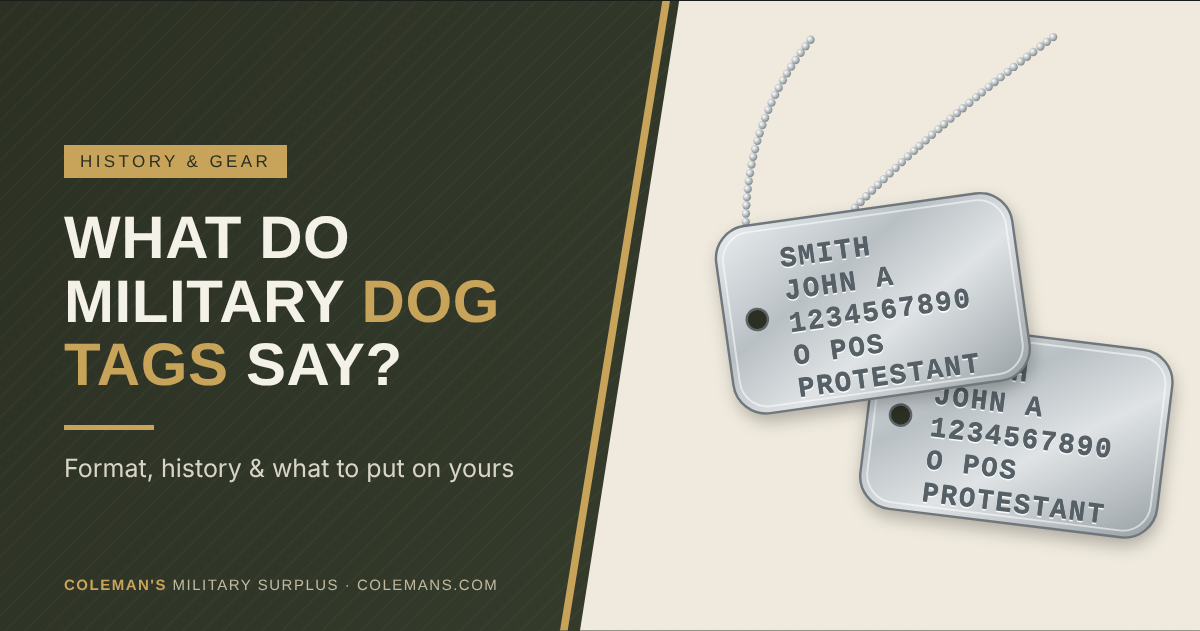
Dog tags are one of the most recognizable pieces of military gear, and one of the most misunderstood. Most people know they carry a name and some numbers, but few know what each line means, why there are two tags, or how the format changed over the decades. Whether you collect militaria, are a veteran, are keeping a loved one's tags, or just want a good replica for the trail, here is how military dog tags work.
What Are Dog Tags For?
Dog tags are military identification tags. Their job is simple and serious: identify a service member quickly if they are wounded or killed, and give medical personnel key information, such as blood type, when it matters most.
The nickname's origin is debated, but it stuck during World War II. Officially, they are just "identification tags."
A Short History of Military Dog Tags
Before official tags, soldiers had no standard way to be identified. In the Civil War, many pinned paper notes to their clothing or bought private ID badges from merchants, because the army issued nothing.
The U.S. Army made identification tags official with General Order No. 204 in December 1906, calling for an aluminum disc stamped with the soldier's name and unit. By 1913 tags were mandatory and the Army required two tags per soldier, a rule that still stands. The Navy and Marine Corps adopted their own versions around World War I.
The details changed over time:
| Era | Typical Information on the Tag |
|---|---|
| WWI | Name, rank, unit, later service number |
| WWII | Name, service number, tetanus date, blood type, next of kin, religion |
| Vietnam | Name, service or Social Security number (Army moved to SSNs in 1969), blood type, religion |
| Modern era | Name, DoD ID number, blood type, religious preference |
WWII tags are the most iconic. They were rectangular with a small notch in one corner, and they listed next-of-kin information, which later formats dropped for privacy.
What Do Modern Dog Tags Say?
Formats vary by branch and have been updated over the years, but a typical modern U.S. tag lists:
- Last name
- First name and middle initial
- DoD ID number, which replaced the Social Security number as identity theft became a concern
- Blood type and Rh factor, such as O POS or A NEG
- Religious preference, such as Protestant, Catholic, Jewish, or No Preference
Here is a fictional example of the layout:
SMITH
JOHN A
1234567890
O POS
PROTESTANT
The religious preference line lets chaplains and burial details provide the correct services. Service members can choose "No Preference."
Why Are There Two Tags?
Historically, one tag stayed with the body and the other was collected for record-keeping. The pair is also a backup if one is lost or damaged. The tags usually hang on different chain lengths, a longer chain around the neck and a shorter one holding the second tag, so one can be removed without disturbing the other.
What About the Notch?
A popular myth says the notch on WWII tags was for placing the tag between a fallen soldier's teeth. That is false. The notch helped align the tag in the embossing machine that stamped the metal, and it later helped medical staff line the tag up when imprinting forms.
What Are Dog Tags Made Of?
Early tags were aluminum. By WWII, many were made from Monel, a corrosion-resistant nickel-copper alloy. Today's tags are usually stainless steel, which stands up to rust, sweat, and hard use. Many have a rubber silencer around the edge so the tags don't clink together when quiet matters in the field.
What to Put on Your Own Dog Tags
If you are making a replica or personal set, you have several options:
- Historically accurate replica. Pick an era, such as WWII, and follow its format line by line. This is popular with reenactors and collectors building a period-correct kit.
- Modern military style. Use the five-line layout, swapping the DoD ID number for a phone number or leaving it out.
- Personal safety tags. Tags are genuinely useful for hikers, hunters, campers, and travelers. Consider your name, an emergency contact, blood type, and any key allergy or medical condition.
- Tribute or keepsake. Many families make a set for a veteran with their name, branch, and years of service.
A few practical tips:
- Keep it short. Space is limited, and most tags use a single line of capital letters.
- Skip sensitive data. Don't put your full Social Security number on a tag.
- Add a medical ID if needed. For a serious allergy or condition, a dedicated medical alert is still the safest choice.
- Be respectful. Wearing replica tags is fine. Wearing someone else's real tags, or presenting yourself as a service member when you aren't one, is not.
Genuine, New Old Stock, or Reproduction?
Three types of tags circulate. Genuine issued tags belong to a real person and are best kept with the veteran or family. New old stock (NOS) blanks were never stamped, which makes them popular for custom projects. Reproductions copy the shape and style of historical or modern issue and are the easiest way to get a set that looks the part.
Collectors who enjoy tags often like the rest of the era too. Coleman's Militaria section and its Misc Militaria Gallery are good places to browse for display-worthy pieces, and the Military Manuals category has paper and digital references for researching the history behind them.
Dog Tags for the Trail: Build a Kit Around Them
Since many people wear tags for outdoor safety, they work best as one part of a prepared kit. Coleman's surplus categories cover the rest:
- Carry it: Tags are a natural pairing with a military backpack or a few pouches and bags for organizing small essentials.
- Prepare for emergencies: Survival kits, emergency products, and medical supplies cover the basics to have on hand when something goes wrong.
- Camp and stay warm: Browse camping gear, military sleeping bags, and military blankets for the night, and cold weather gear when temperatures drop.
- Dress the part: Clothing, military camo pants, and boots and footwear round out a field-ready outfit.
- Hunt and shoot: Hunters can head to shooting and hunting gear and camo gear.
- Small items that matter: Coleman's U.S. G.I. Paracord Value Pack and the Rite in the Rain Camo All-Weather Notebook are the kind of simple, dependable gear that pairs well with a set of ID tags.
Why Dog Tags Still Matter
Digital records and DNA identification exist, yet tags are still issued. They are simple, durable, and need no power, signal, or database. A tag stamped into metal will outlast almost anything else a service member carries.
That durability is also why they carry so much meaning. For many veterans and families, dog tags are among the most personal items from a time of service: small, plain, and unforgettable.
Explore Military Surplus at Coleman's
Coleman's Military Surplus has been family owned and operated for over 50 years, with authentic gear for collectors, campers, hunters, and preparedness-minded customers. Browse Best Sellers or Recently Added to see what is new, or contact the team if you are looking for something specific.


About the Author

Comments